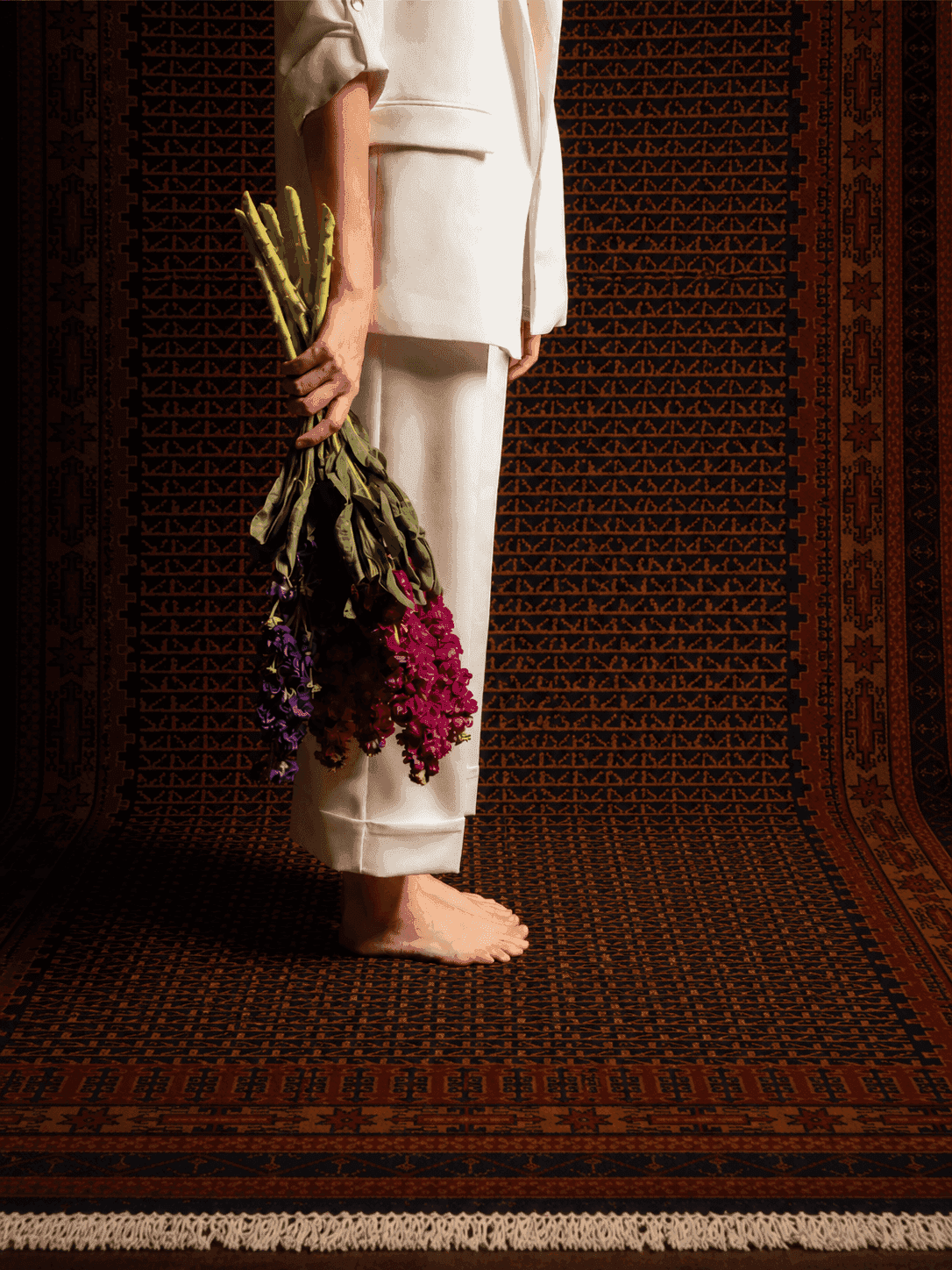
The studio
A house with lineage.
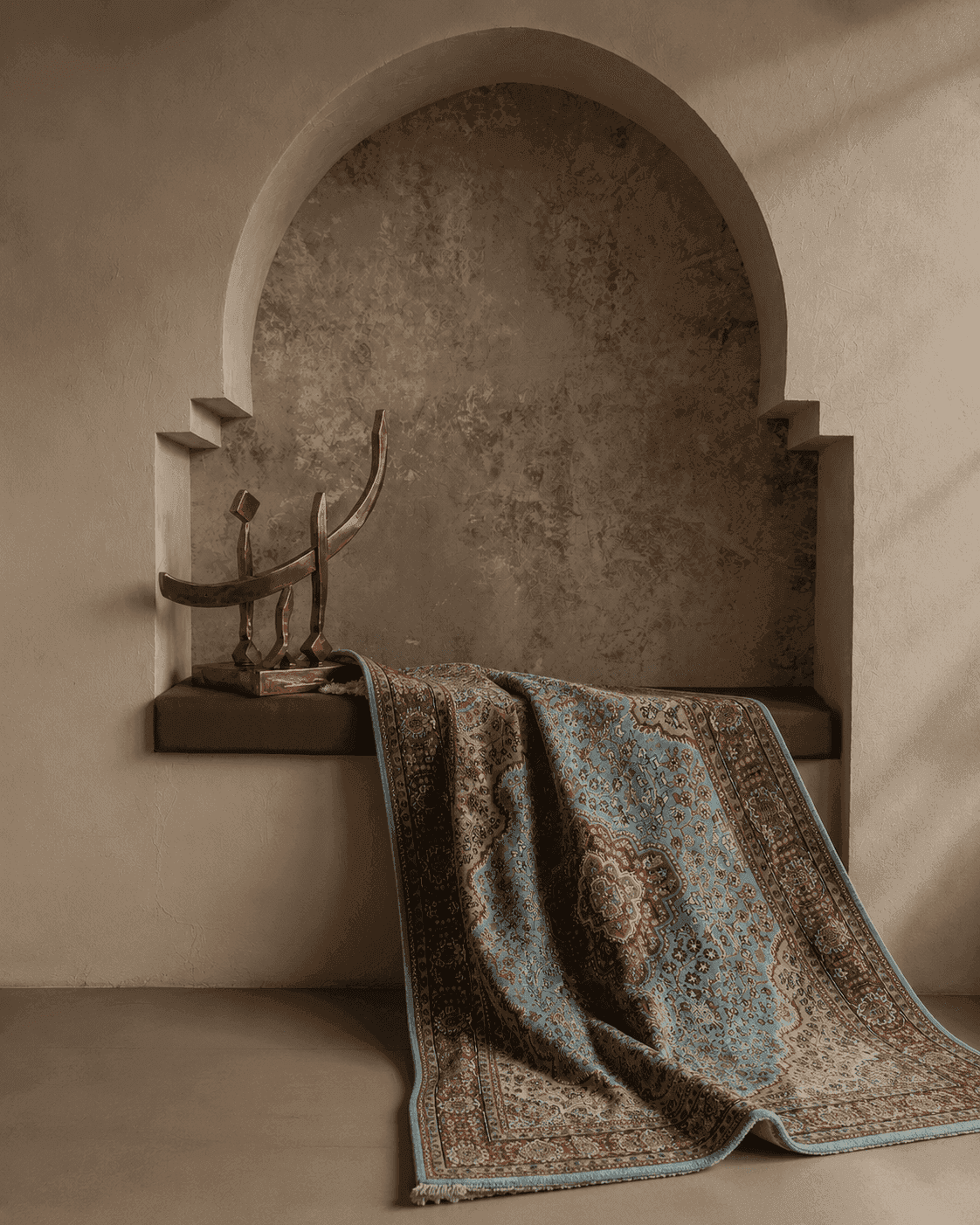
The house
Ergané approaches the rug as part of the architecture.
Each piece begins with a room: its scale, its rhythm, its materials, and the way it is lived in. Form, proportion, edge, density, and colour are developed in response to that setting.
The rug is considered from the beginning, not introduced at the end. It may follow the architecture, alter a proportion, hold a group of furniture, or give a room its centre.
Every piece is made to order for the place it will inhabit.
The aim is simple: a rug that feels as though it could belong nowhere else.
The approach
We begin with the space.
Before colour or motif, we consider proportion, movement, thresholds, furniture, and the relationship between one area and the next. The shape of the rug emerges from these conditions.
Nothing is treated as incidental. Scale is established early. An edge may follow a wall, break from it, soften a corner, or create its own geometry within the room.
Material follows use.
Wool is chosen for its resilience, depth, and the character it develops over time. Silk may be introduced where a change in surface or light is needed. Variations left by the hand are preserved as part of the piece.
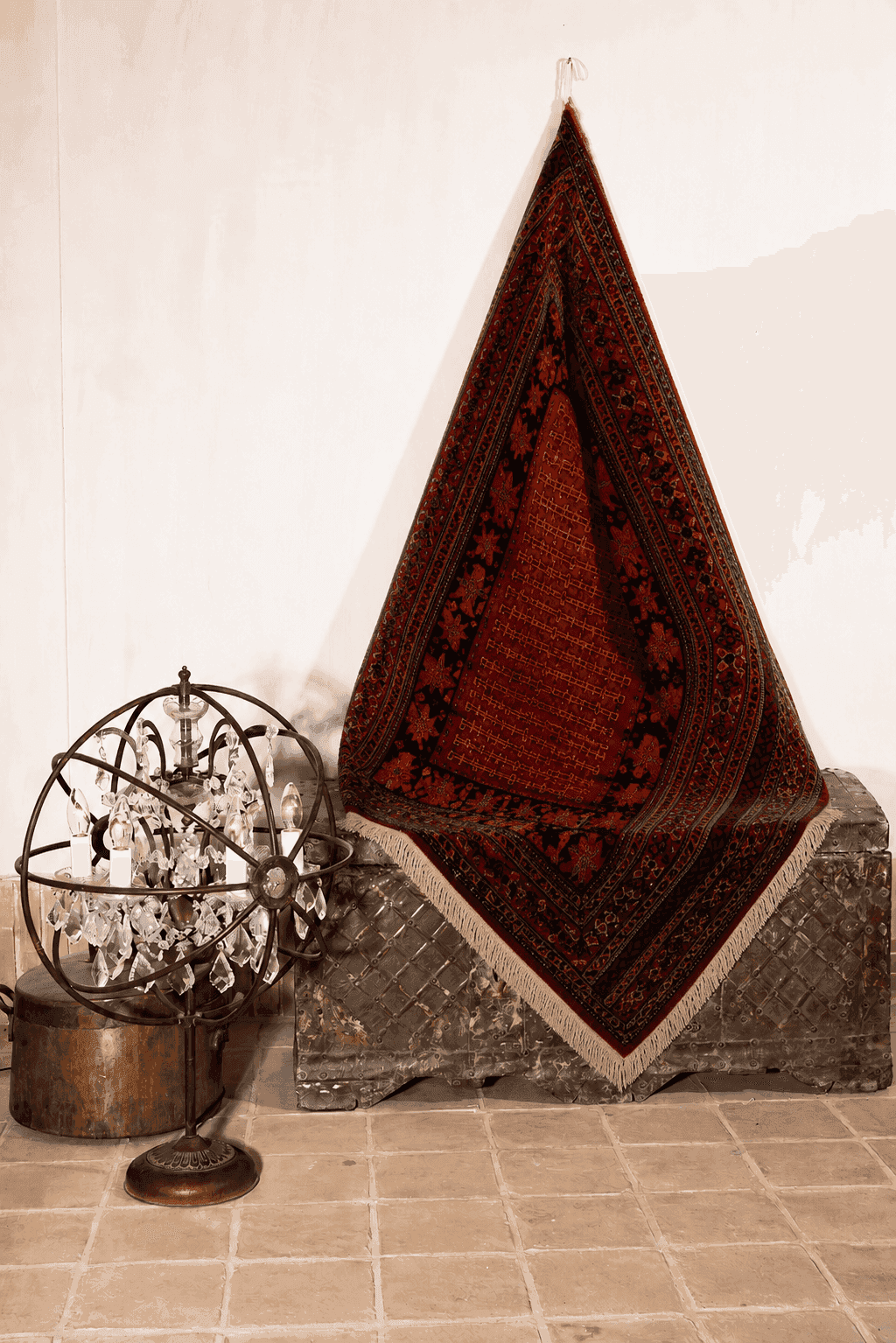
Each rug is knotted by hand. The drawing begins the work. The loom completes it.
What remains is an object made for a particular room, by particular hands, at a particular moment.
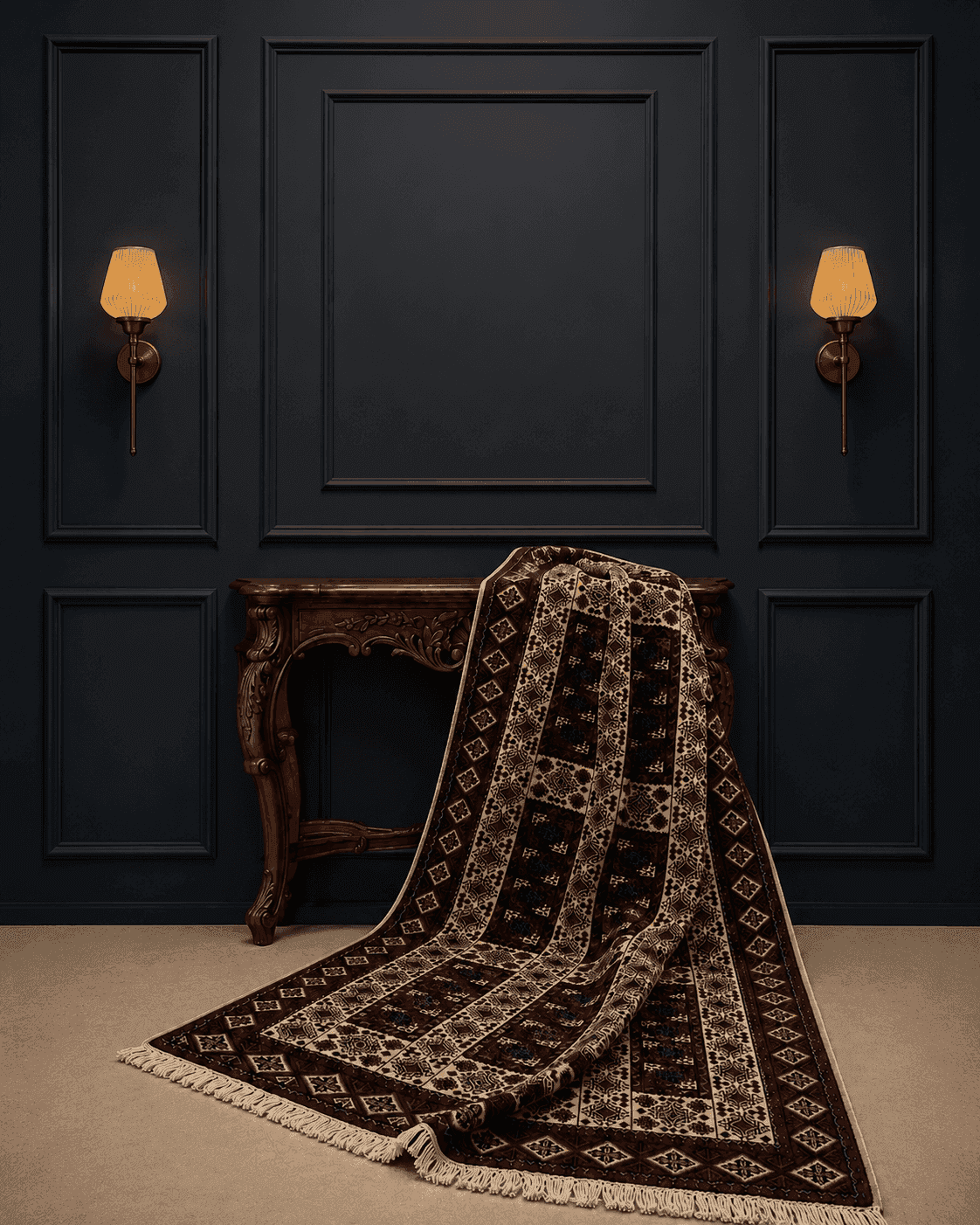
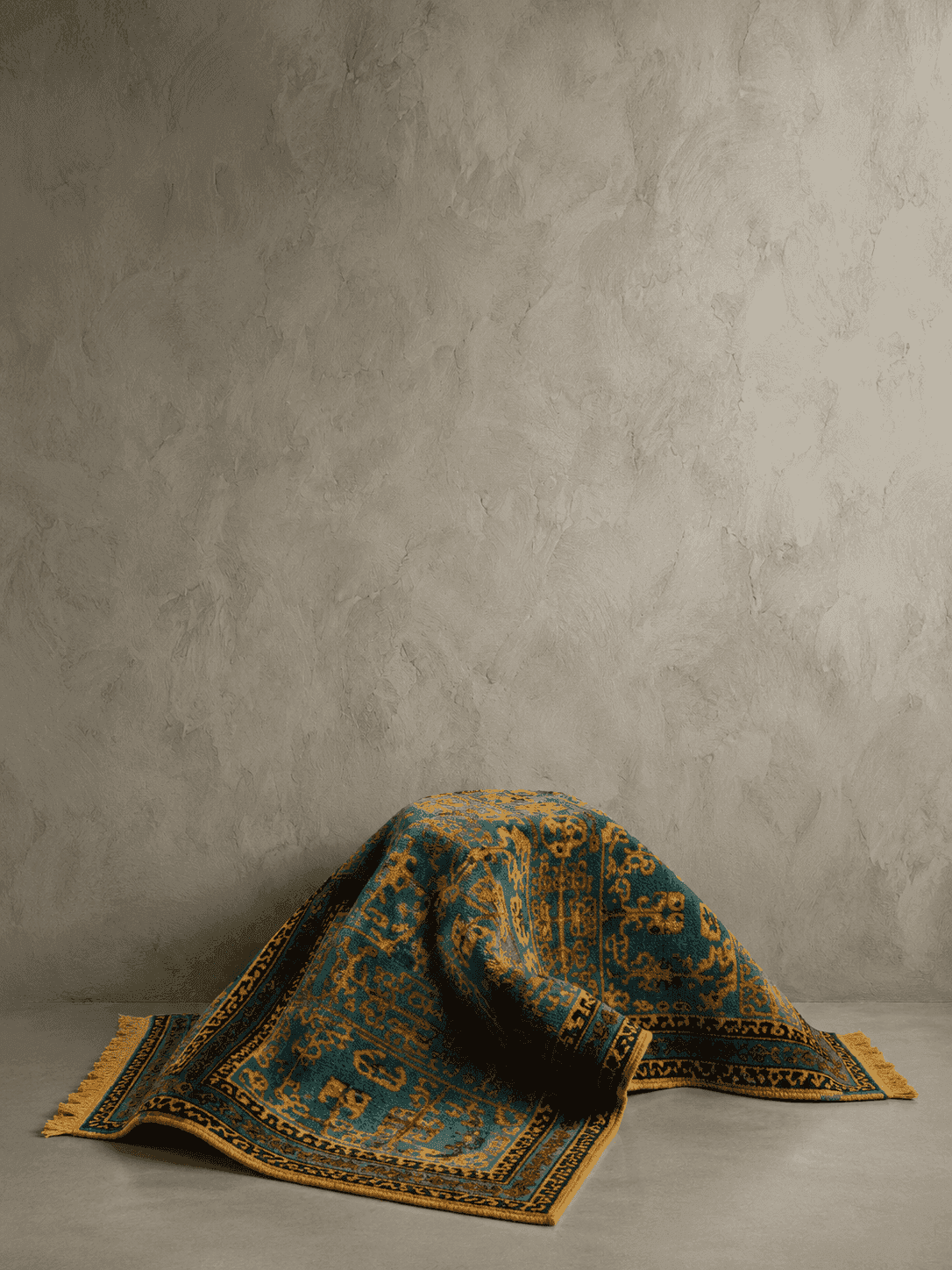
The name
Ergané is an epithet of Athena, patron of weavers and those who work by hand.
The name carries an old idea: that making is a form of thought.
A rug is not finished in the drawing. It continues at the loom, knot by knot, in the hands of the person making it. The weaver does not simply reproduce a design. They complete it.
Ergané was named for that exchange between design and making, and for the hand that remains present in every piece.